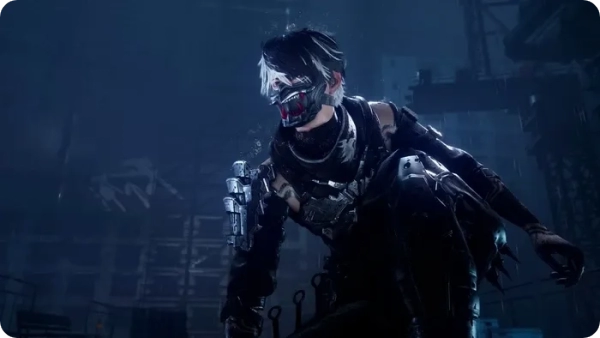
After years of waiting and disappointment from Ninja Gaiden 3, released in 2012, which ruined many beloved elements of the series, Team Ninja, in collaboration with PlatinumGames, released Ninja Gaiden 4 on October 21, 2025.
The game became available on PS5, Xbox Series X/S, and PC platforms, and with the support of Xbox Game Studios, it has tried to bring the series back to its peak days; where fast-paced combat, exaggerated gore, and tough challenges captivated fans. The main campaign takes about 12 to 15 hours, but with additional modes, repeatable challenges, and side missions, it can keep you entertained for dozens of hours. This time, the hero is not Ryu Hayabusa; Yakumo from the Crow clan has entered the fray to destroy the dark dragon and save Tokyo from the curse. Although the story is sometimes simple and mundane, and some levels seem repetitive, the core of the game, which is slaughtering enemies with ninja tools, is so strong and satisfying that its weaknesses are almost forgotten. In the following, we will delve into various details from gameplay to technical performance to see why Ninja Gaiden 4 is worth your time.
The Story of Ninja Gaiden 4: Yakumo and the Battle with the Dark Dragon
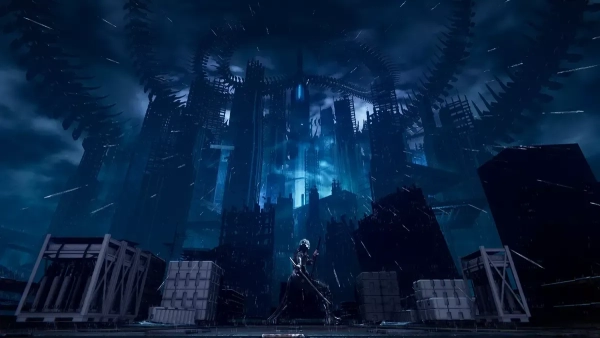
The story of Ninja Gaiden 4 takes place in a cursed Tokyo; where the remnants of the Dark Dragon, the same monster fans remember from the first game and the Dragon Sword, hang over the city, turning life into hell with continuous rain and daemons (demonic creatures). People have left the city, and only daemons and DDO soldiers (the organization protecting the dragon’s remnants) remain.
Yakumo, a ninja of the Crow Clan, is on a mission to kill Seori (the priestess of the Dark Dragon). His clan believes this will destroy the dragon forever. Yakumo infiltrates the DDO base and finds Seori, but Seori explains: killing her will awaken the dragon, not destroy it. The correct way is to break the seals protecting the dragon’s remnants, which are scattered throughout the city. Seals that only ninjas of the Crow Clan can destroy.
Yakumo allies with Seori and, with the help of their companions, travels to different parts of Tokyo, eliminating daemons and breaking the seals protecting the dragon’s remnants one by one. With each broken seal, the Dark Dragon’s power is released a little more, and new, stronger daemons appear, meaning battles gradually become harder.

Meanwhile, the DDO organization and Ryu Hayabusa try to stop Yakumo and Seori; Ryu believes that breaking the seals risks fully awakening the dragon and wants to keep the remnants untouched to keep the city safe.
Overall, the story of Ninja Gaiden 4 is simple and clichéd, and you can guess its ending from the very beginning; characters don’t get a chance to grow, dialogues are repetitive and mostly used to fill the gaps between battles. However, some references to the series’ past will please old fans. Ninja Gaiden 4, as always, focuses on action, and the story is just an excuse for the next slaughter.
A Look at the Various Aspects of Ninja Gaiden 4 Gameplay
Diverse Weapons and Fast Combos
Ninja Gaiden 4 starts from the very first moment with two katanas (Takeminakata); Yakumo’s default weapon, designed for fast and precise combos, keeping the enemy in the air to finish them with an Izuna Drop (a final throw from the air to the ground). These katanas have a good balance between speed and power and are excellent for learning the basic system, but the game quickly adds other types of weapons to break the monotony of combat.

Yakumo’s weapons in Ninja Gaiden 4 all have two modes: a basic mode and a stronger Bloodraven mode (which charges with enemy blood and transforms the weapon); throughout the game, you acquire weapons including Yatousen (Rapier / Drill Lance), Magatsuhi (Staff / Rocket Hammer), Kage-Hiruko (Assassin’s Tools / Mechanical Arms), and the Dark Dragon Blade (Dragon Sword), which is Yakumo’s ultimate weapon, each offering a different gameplay style.
Quick weapon switching with the directional buttons forms the core of the gameplay, allowing you to create chained and creative attacks without pause. Each weapon plays a specific role in this process; katanas are suitable for keeping enemies in the air, the rapier for quick strikes and piercing enemy defenses, and the staff for pushing back multiple enemies simultaneously. This coordination between weapons ensures that combat is not just mindless button mashing, and you can create fascinating combinations with your own ingenuity.
The game also has fluid controls; the feedback from hits (vibration, precise animations, and blood splatter) provides a deep sense of satisfaction. Even a small group of enemies can be troublesome, but when you combine combos correctly, there will be no problem.
Bloodraven Mode: Weapon Transformation with Enemy Blood
Bloodraven, a key innovation in Ninja Gaiden 4, is activated with Bloodbind ninjutsu and transforms weapons into more powerful and different forms after consuming enemy blood. This mode is not permanent; it requires continuous attack and encourages the player to kill faster and more. It is especially useful in crowded battles, but if there is a pause in combat, the weapon returns to its original state.
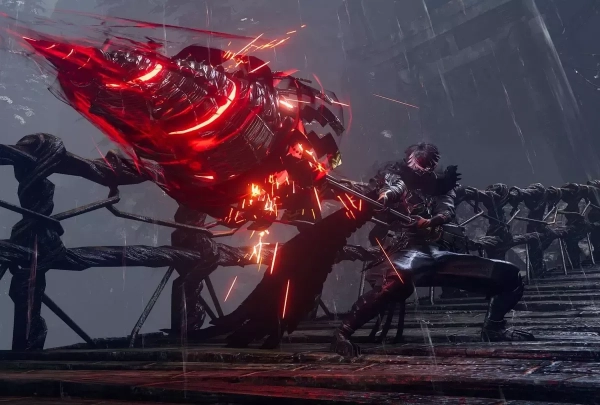
Bloodraven is not just for offense; it is also part of your defensive system. If enemy attacks appear with a Red Glint, you can parry them with Bloodraven and momentarily unbalance the enemy. Or, if you perform a Perfect Dodge at the right moment, you get the opportunity to dismember and deliver a fatal blow.Overall, this mechanic, where the blood of enemies turns into your power, doubles the enjoyment of the game’s battles.
Defense and Special Techniques: Parry, Dodge, and Berserk
In Ninja Gaiden 4, defense is as important as offense, and the combat system is designed so that every mistake carries a heavy cost. For blocking normal attacks, a simple block suffices, but red glint attacks are unblockable and require quick reactions. You can use your weapon’s Bloodraven mode to create an opening for a counterattack. Parry is one of the brightest parts of combat; if you parry an enemy’s attack at the precise moment, Fatal Flash activates and instantly eliminates the enemy with a quick slash. As you progress further, you unlock a more advanced skill called Perfect Final Flash; now, if you execute this move with Bloodraven, you can take out a group of enemies with one strike instead of just one.
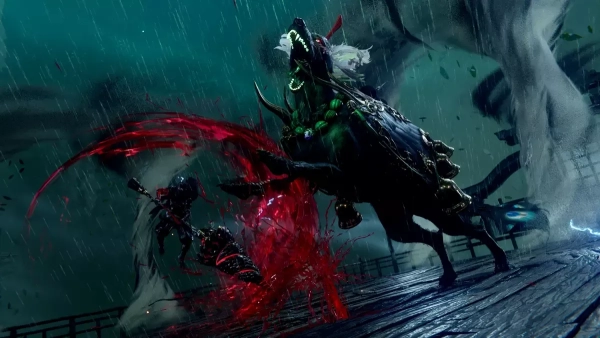
Dodge also plays a key role; with a Perfect Dodge, in addition to defending, you can sever an enemy’s limb and then immediately use the opportunity to attack. A normal dodge is not useless either and is good for a quick escape from danger.
In Gaiden 4, there is a Berserk Gauge that fills up when you finish off enemies with the Obliteration move. When it’s full and activated, Yakumo enters Berserk mode; in this state, attacks are now several times stronger than before, and clearing the battlefield of enemies takes only a few minutes. You can even combine this mode with Bloodraven techniques.
Mastering these techniques is not very difficult and you will get the hang of it as you progress through the game.
Enemies and Boss Fights: Breathtaking Challenges
Ninja Gaiden 4’s enemies have good variety, but sometimes they become repetitive. Regular DDO soldiers attack with their swords and are easily destroyed, but elite versions with strong armor, electrical attacks, and strong guards are the game’s real challenge. Daemons have also returned; and you encounter all kinds of them along the way. The enemy AI is good and reacts to your attack style, but the problem is that in different parts of the game, the same enemies appear repeatedly without change, and this repetition can become tiresome after a while. Boss battles, however, are better, with about 20 main bosses, each with unique patterns. From the DDO commander and the giant Proto-Goliath machine to the magical Kitsune fox and the breathtaking duel with Ryu Hayabusa, and even the Dark Dragon in various phases. Each boss requires a specific strategy, but it can definitely be said that boss fights are exactly what keep the game’s adrenaline high from start to finish.
The Return of Ryu Hayabusa: Engaging but Insufficient
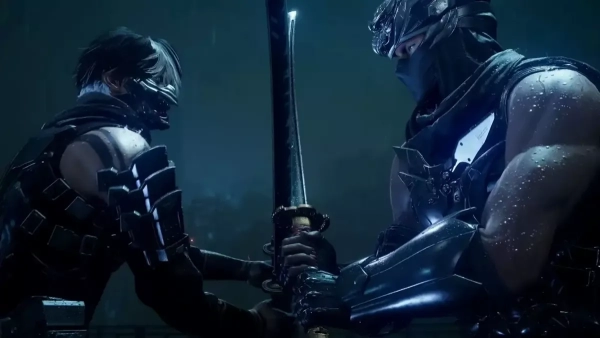
When you take control of Ryu Hayabusa in the final chapters, you feel like the true master of the series has returned with his fast and deadly combos that revive the nostalgia of Ninja Gaiden 2.
But this return is short and incomplete. Ryu only appears in a few limited stages and has only one weapon, the Dragon Sword. His stages are also repetitions of previous locations and lack different platforming or new boss fights; it’s as if the developers wanted to please old fans, but rushed it. Even the DLC Two Masters, which adds new stages for Ryu, cannot compensate for this unfinished feeling. Ultimately, the powerful Ryu returns, but on the sidelines of Yakumo’s story.
Ninja Gaiden 4 Additional Content: High Challenges and Replayability
When the story ends, Ninja Gaiden 4 truly begins to shine. With Chapter Select, you can replay any stage, with all the weapons and upgrades you’ve acquired, on any difficulty you want, even with Ryu instead of Yakumo. This means you can experience the entire game with Ryu.
Boss Trials mode makes all the game’s bosses available separately, the choice is yours; Yakumo or Ryu, desired difficulty, or even without any upgrades. Combat Trials are also a combination of enemies with special conditions, such as “fight without Bloodraven mode,” challenges that were appealing to many players and myself.
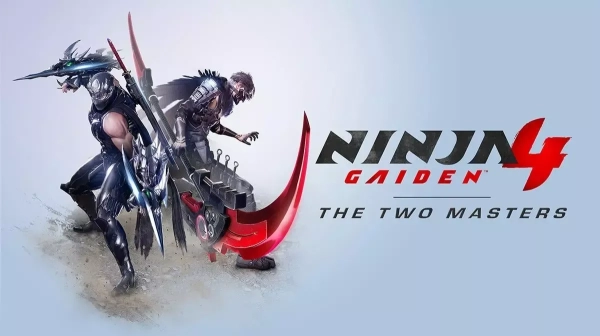
There is also the Purgatory Trials section; challenges involving waves of enemies hidden in various corners of the stages. Before entering, you must wager a portion of your health; the greater the risk, the more valuable the reward. But don’t worry, even if you fail, these stages remain open for another attempt.In Ninja Gaiden 4, difficulty levels range from Normal to Master Ninja, each presenting its own unique challenge. The presence of online leaderboards encourages players to compete for the best records and showcase their skills. Additionally, the Two Masters expansion pack, set to be released in early 2026, will add new stages, new weapons, and content for Ryu and Yakumo.
All of these factors ensure that Ninja Gaiden 4 won’t quickly become repetitive and will be endless for those who love a challenge.
Graphics, Sound, and Performance of Ninja Gaiden 4: Gore and Rock Music
Ninja Gaiden 4’s graphics are strong; character and enemy animations are fluid and precise, models are highly detailed, and environmental scales, such as massive bridges or rainy cities, are impressive. The gore is exaggerated and satisfying. However, in terms of appearance and artistic design, the game lacks variety; most environments resemble industrial facilities and dark cyberpunk cities, with perpetual rain and gray colors, which can make the game’s atmosphere feel monotonous after a while and create a sense of fatigue.
Ninja Gaiden 4’s music is a blend of traditional Japanese drums and energetic rock, and during boss battles, the addition of vocals and fast guitars adds more excitement to the game. Sound effects are also clear and well-implemented, especially in hits, explosions, and blood splatters.
The game’s performance is optimized across all platforms, and we didn’t observe any significant frame drops during gameplay; PS5 and Xbox Series X have three modes: Quality (1440p 30fps with high details), Performance (1080p 60fps balanced), and 120fps (720p fast). PS5 Pro also adds a Pro mode with PSSR and VRR up to 60fps. It also performs well on PC. With DLSS and FSR enabled, an RTX 4060 card can run the game at 1440p with over 60 frames per second. Above that, an RTX 5090 card can run the game in 4K at around 120 frames per second with DLAA.
About the Author